
Last updated November 24, 2026
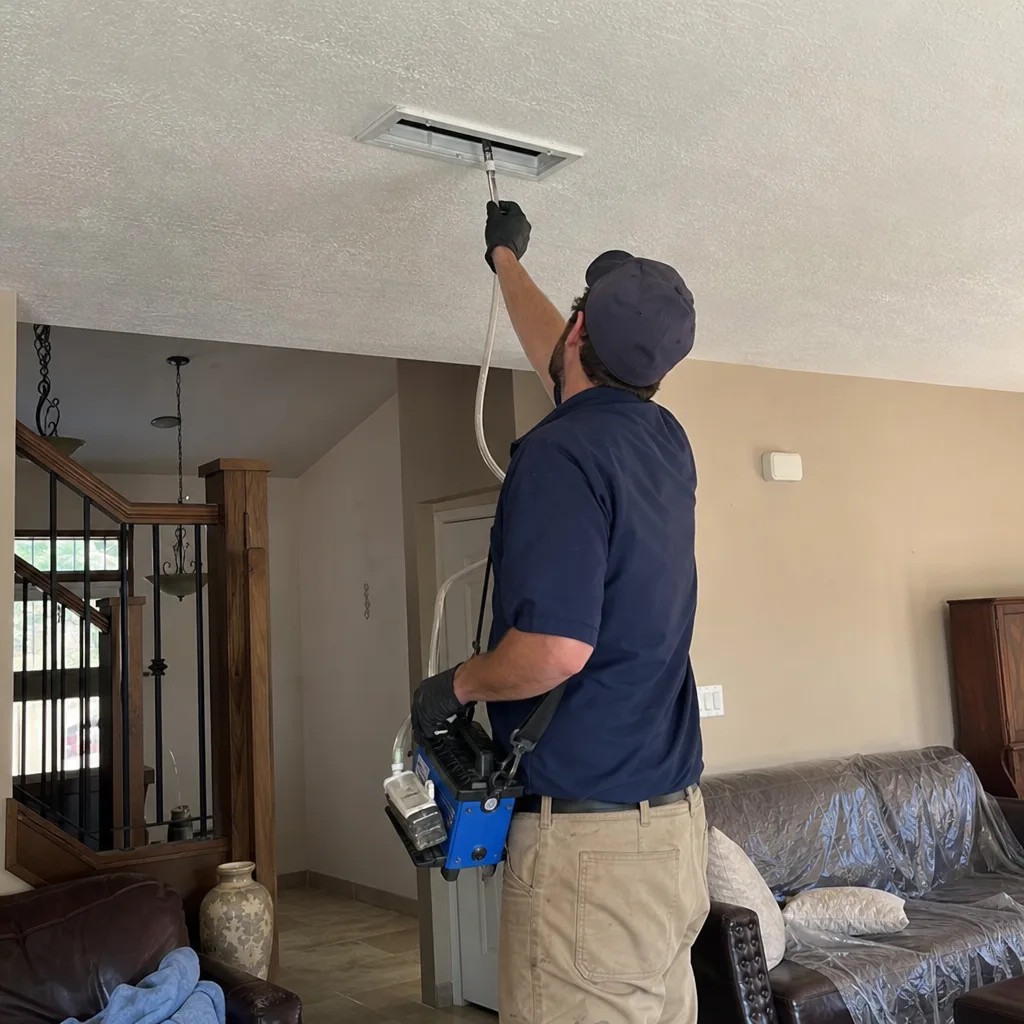
 Whole-home duct cleaning
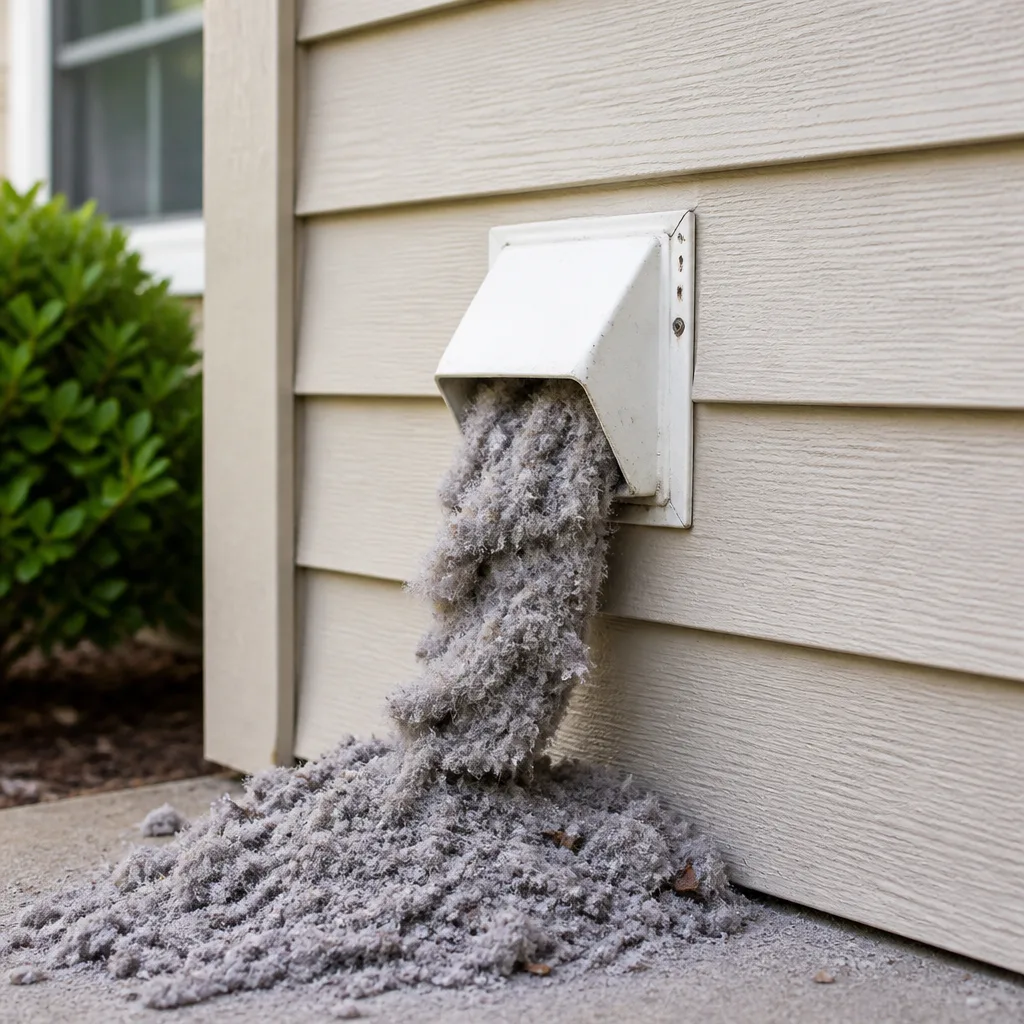 Dryer vent cleaning
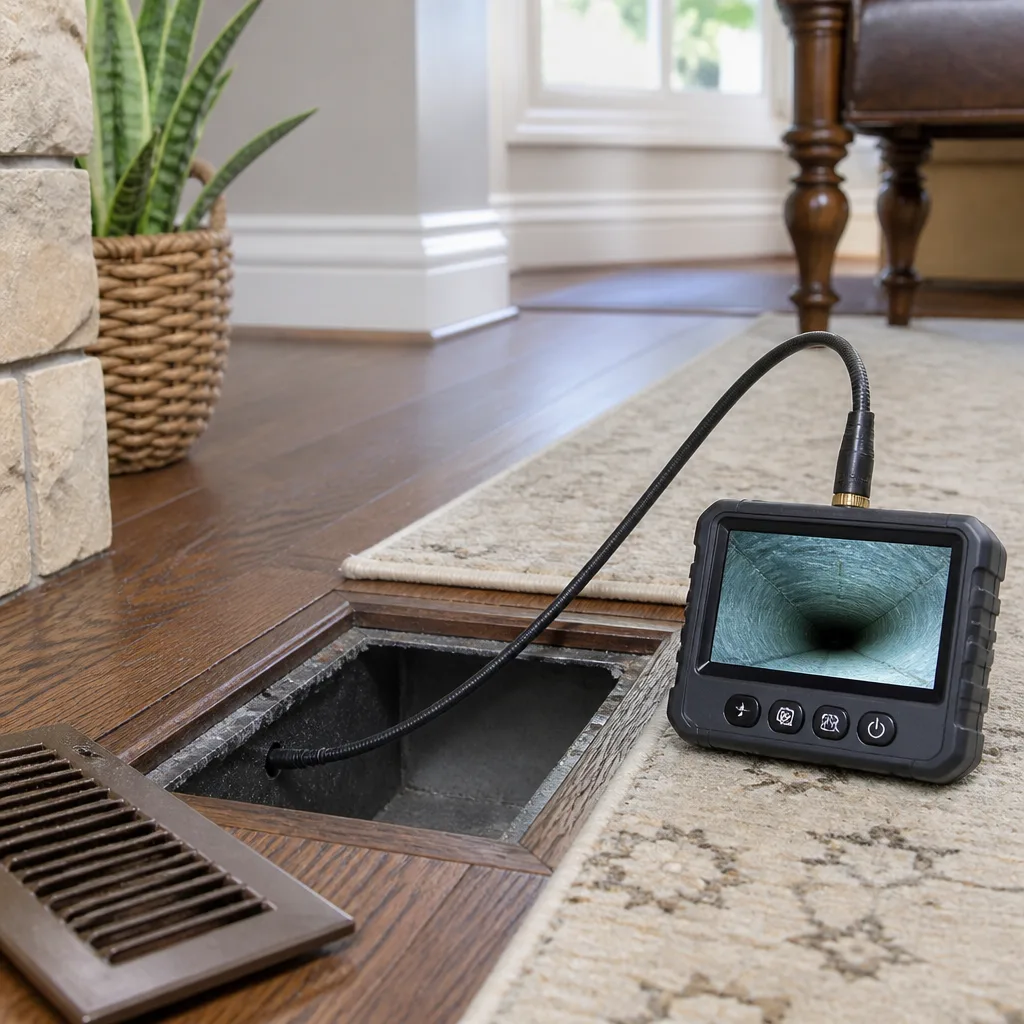 Camera inspection
 Sanitizing & deodorizing
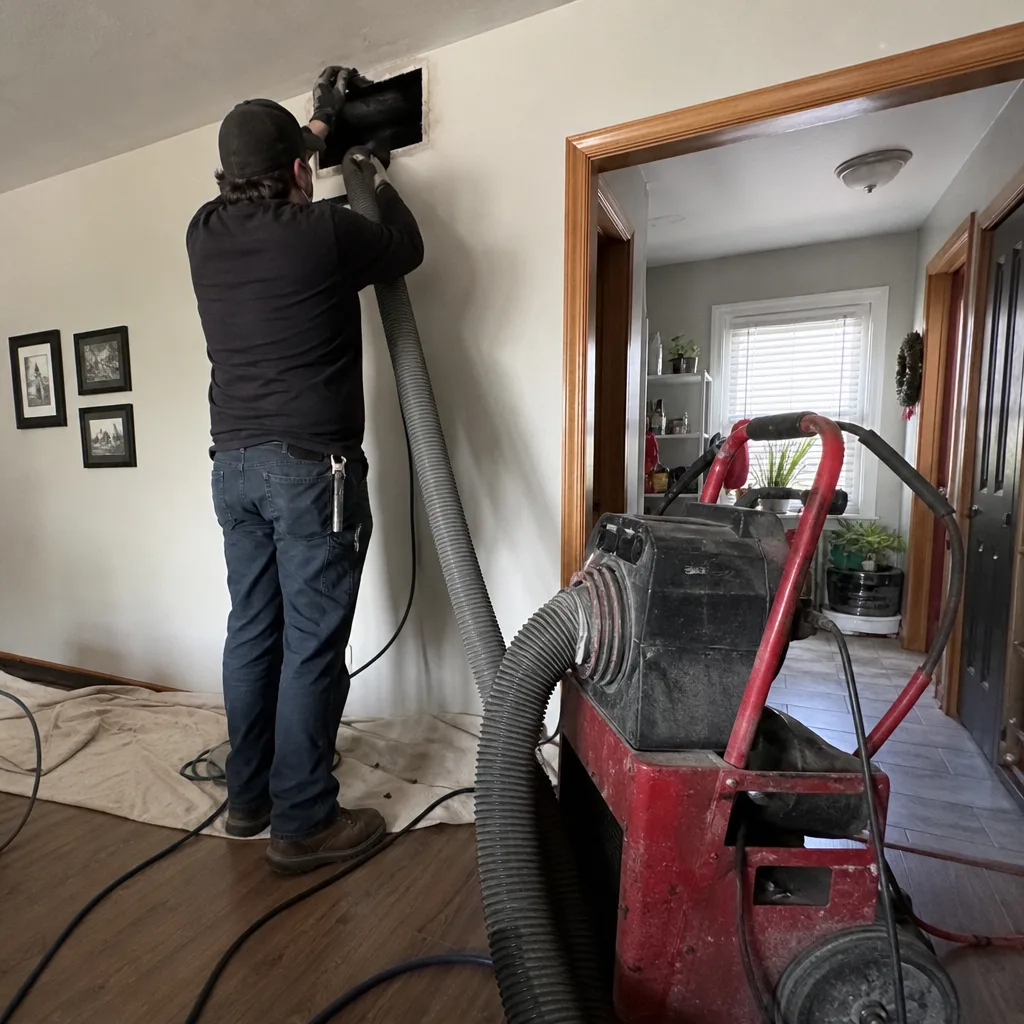
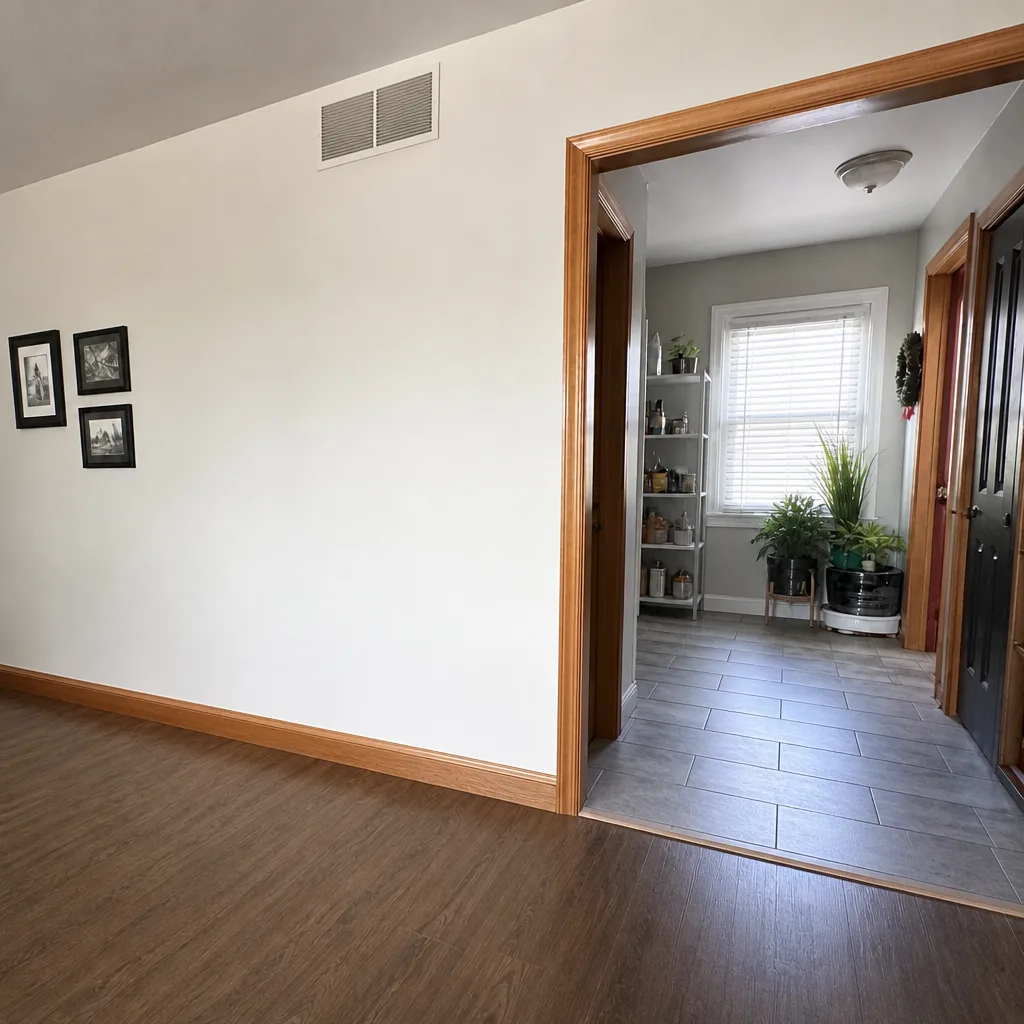
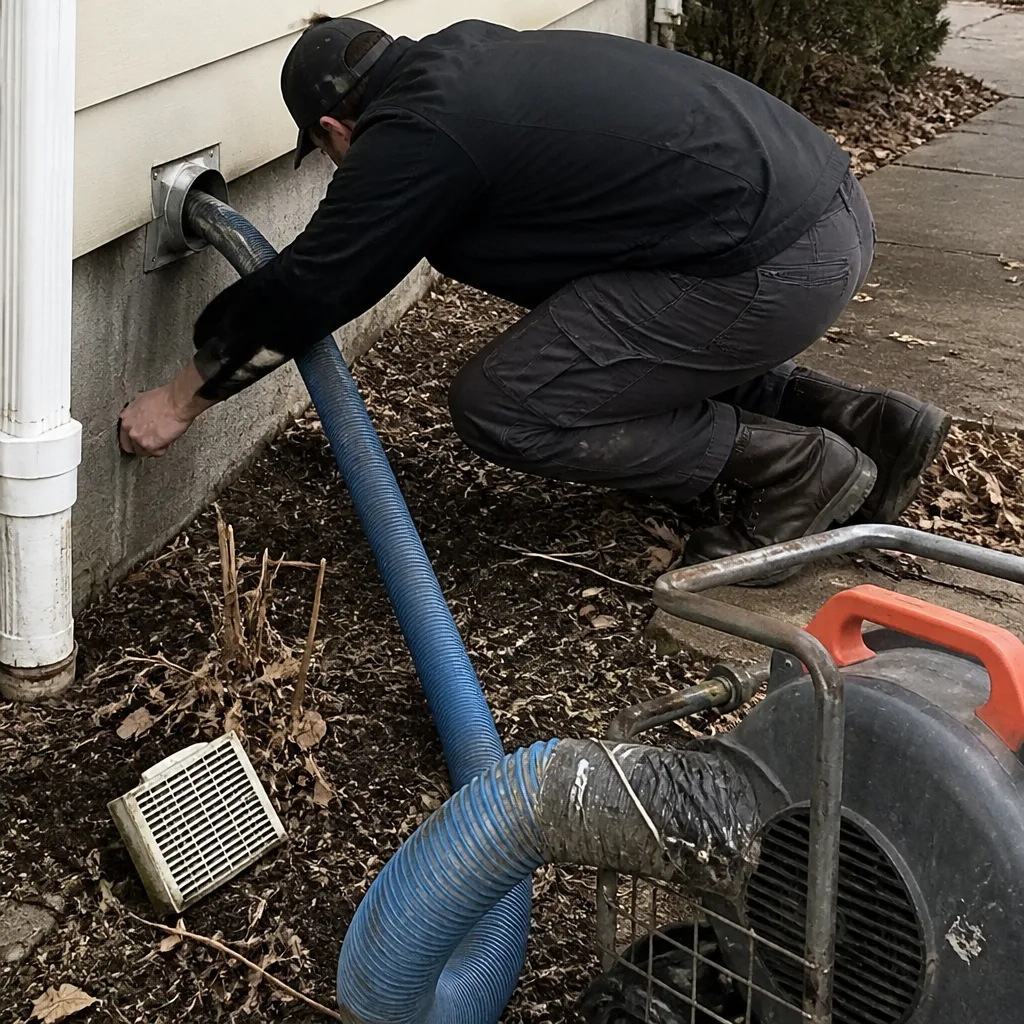
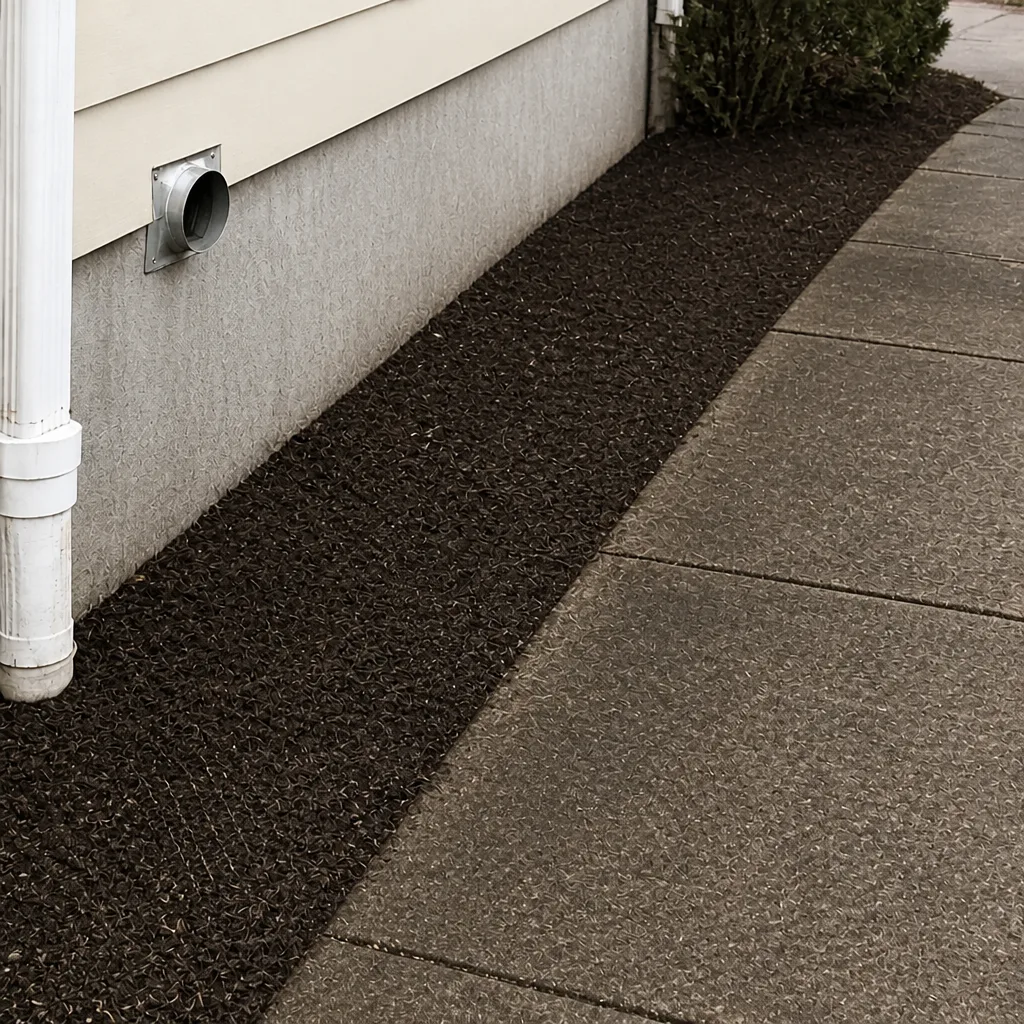
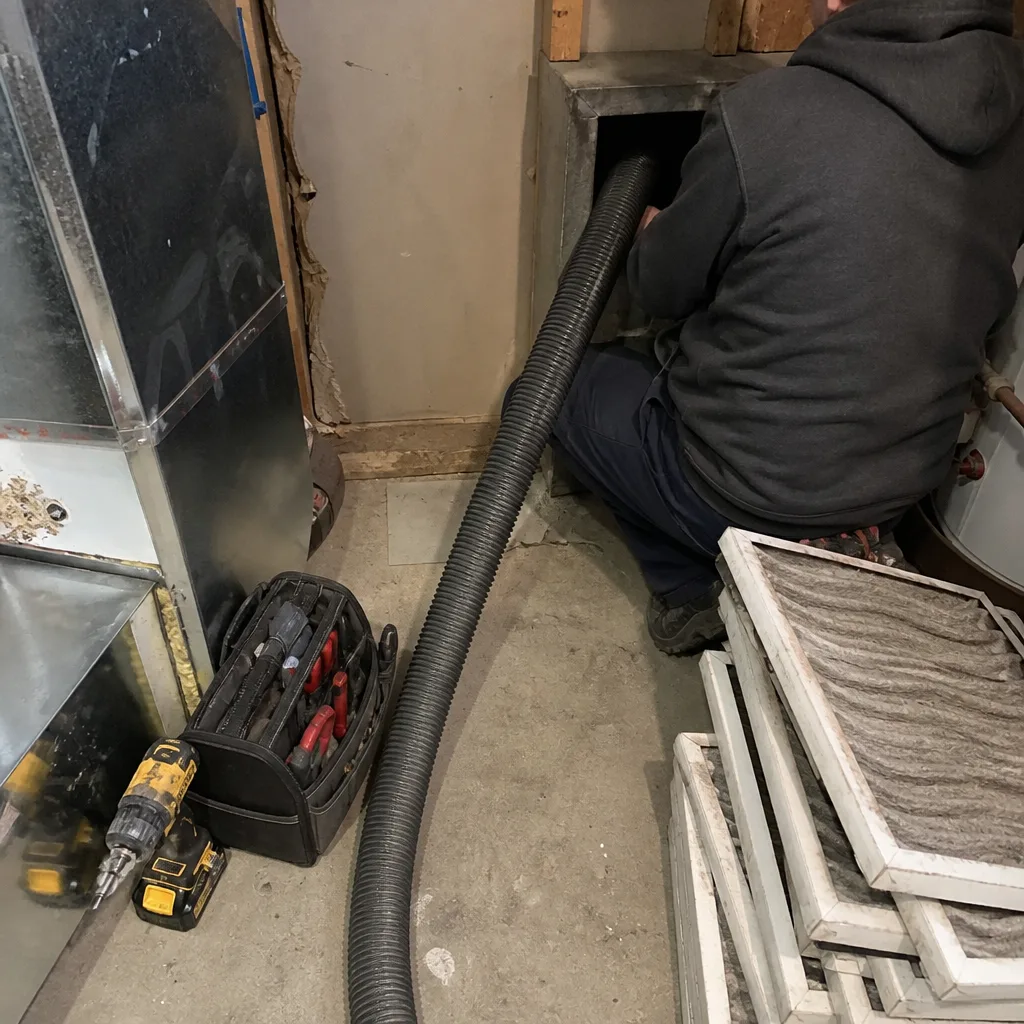
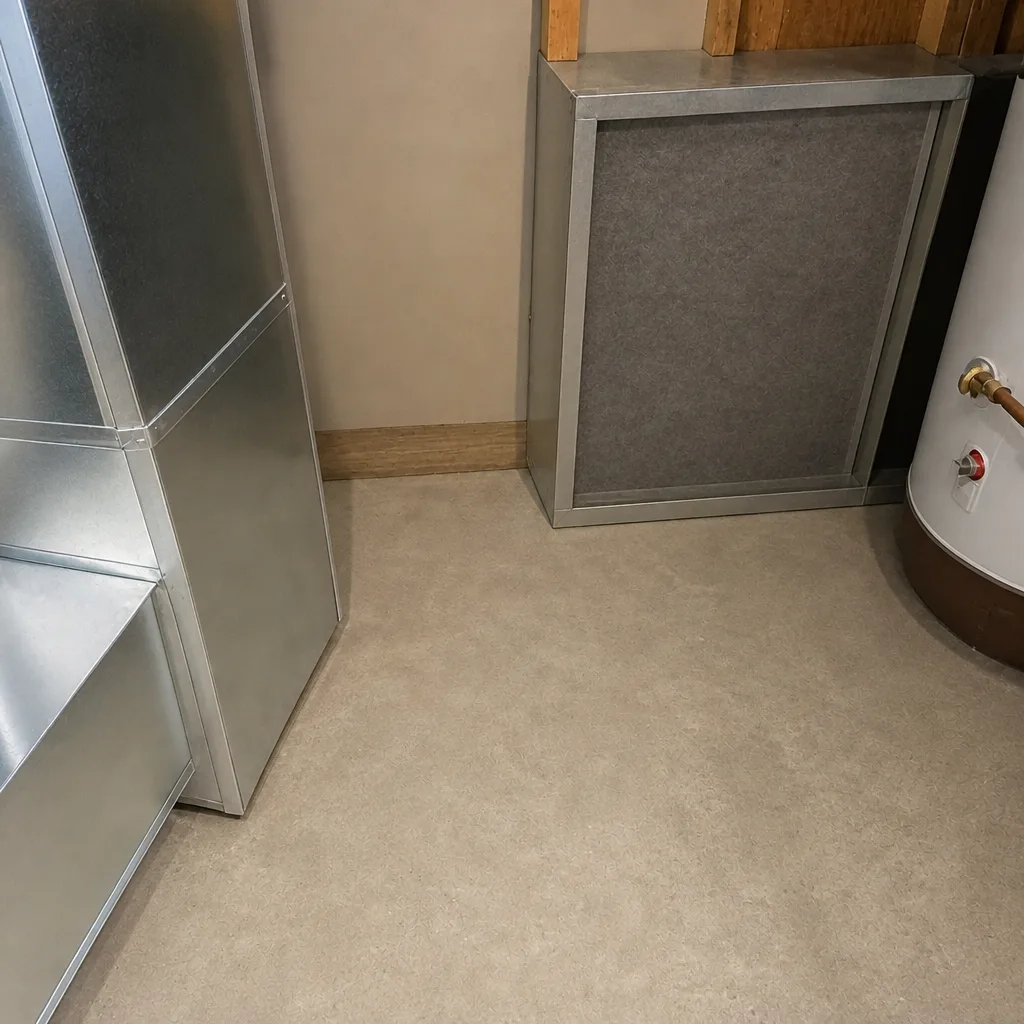
Whole-system duct and dryer vent check with before-and-after photos - you see exactly what came out of your vents
That "$99 whole-house special" is a bait ad - the real number appears once they are in your hallway, or the "clean" is a shop-vac at the register. We photograph the inside of your ducts before and after instead.
DIY vs Professional Air Duct Cleaning: The Orem Homeowner’s Decision Guide
A $30 brush kit and a shop vac can clean your registers and the first 18 inches of your duct runs. After that, you’re redistributing debris, not removing it. That’s the part most DIY guides skip, and it’s the part that decides whether a weekend project actually improves your indoor air or just moves the problem deeper into the system. In this guide we’ll walk through what consumer equipment genuinely accomplishes, where it hits a hard ceiling, which jobs make sense as a first step in Orem, and how to run an honest cost-versus-benefit calculation before you spend a Saturday on a ladder.
Quick Answer
DIY duct cleaning works for surface-level tasks: washing grilles, vacuuming the first stretch of accessible duct, and clearing lint from a short straight dryer run. Professional cleaning is what removes debris from the trunk lines, plenums, and the air handler itself, because that requires sustained negative pressure and rotary agitation that consumer vacuums can’t produce. In Orem, where spring runoff and summer dust both load the system, most homes get the best result from a light DIY pass on the easy surfaces plus a full professional cleaning on the parts you can’t reach.
Styles & brands we work with
- Whole-home duct cleaning
- Dryer vent cleaning
- Camera inspection
- Sanitizing & deodorizing
Table of Contents
- What DIY Air Duct Cleaning Actually Accomplishes
- Why Negative Pressure Is the Whole Ballgame
- When DIY Is a Reasonable First Step in Orem
- When DIY Makes Contamination Worse
- The Honest ROI: Cost vs. Real Efficiency Gain
- What Professional-Grade Equipment Actually Changes
- Dryer Vents: A Special Case
- Common Mistakes to Avoid
What DIY Air Duct Cleaning Actually Accomplishes
Let’s be fair to the shop vac. It does real work on the parts of the system you can see and reach, and those parts matter more than people give them credit for. Register grilles collect a visible film of dust that gets pulled back into the room every time the blower kicks on. Washing them by hand removes that film completely, and it’s the single cheapest air quality improvement in the house.
Here’s what a careful homeowner can genuinely take on:
- Register and return grille cleaning. Remove each cover, wash it in a tub with mild detergent, dry it fully, and reinstall. This removes the dust mat that sits right at the delivery point.
- Accessible duct surface wiping. For the first foot or so inside each register boot, a damp cloth or a soft brush on a short handle lifts loose dust off the metal.
- Supply boot vacuuming. A shop vac with a brush attachment, run gently, pulls loose debris from the visible boot without pushing it deeper.
- Filter changes. Not duct cleaning, but it’s the highest-leverage maintenance task in the whole system and it belongs in the same conversation.
That list is real. It reduces visible dust, cuts musty odors coming from grilles, and keeps the immediate delivery points clean. What it does not do is touch the trunk lines, the main plenum above the air handler, or the branch runs buried in walls and ceilings. In a typical Orem home, the accessible fraction is a small slice of total duct surface area. The rest of it keeps cycling air with whatever has settled there.
Why Negative Pressure Is the Whole Ballgame
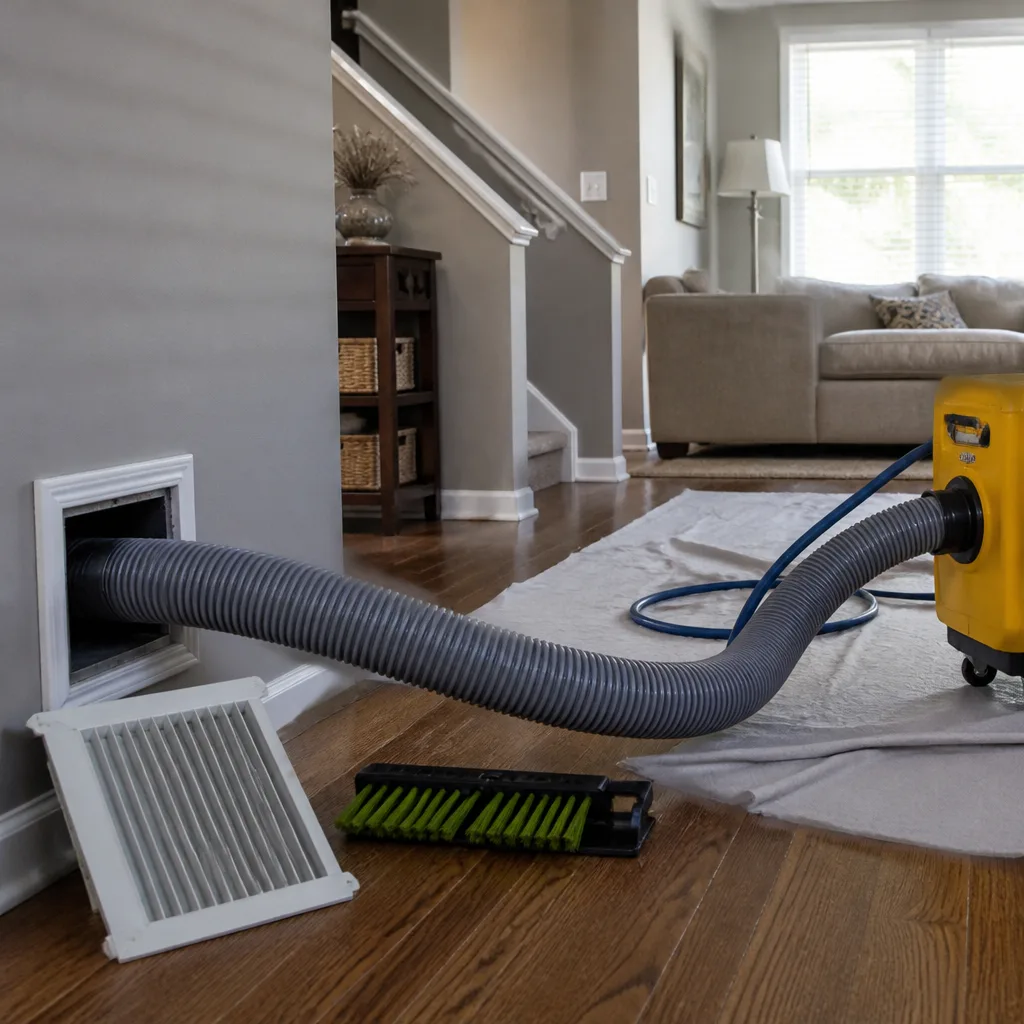
Professional duct cleaning isn’t a bigger shop vac. It’s a different principle. A negative-pressure setup seals the system at the registers and pulls a continuous vacuum on the whole duct network from a single collection point, usually at the main trunk or through the air handler. While that vacuum holds, a rotary brush or air whip travels the duct, loosening debris from the walls. The debris gets captured at the source instead of drifting into the living space.
Consumer equipment can’t do this for three structural reasons:
- Seal and volume. A shop vac pulls a small volume of air from one open register. A negative-air machine moves enough air to hold the entire duct network under vacuum at once.
- Reach and agitation. A rotary brush is driven by a flexible shaft that travels 20, 30, 40 feet down a run, scrubbing the walls as it goes. A hand-held brush reaches a few feet at best.
- Contamination control. Professional setups use HEPA filtration on the exhaust so dislodged particles are captured, not blown back into the room. That’s why we carry Abatement Technologies HEPA equipment: contamination control matters during the job, not just after.
Here’s the piece most people miss. When you vacuum one register with a shop vac while the rest of the system is open, you create a small pressure differential that pulls air (and dust) from the other registers toward the one you’re working on. You’re not extracting debris from the system. You’re moving it around inside the system. That’s the structural limit, and no amount of elbow grease closes it.
When DIY Is a Reasonable First Step in Orem
There are real scenarios where picking up a brush kit is the right call, and we’d rather tell you that than sell you a cleaning you don’t need. If your system was cleaned recently and you’re doing upkeep, DIY handles the visible layer well. If you’ve just finished a renovation and drywall dust is sitting on the grilles, a careful register cleaning is worth doing before anything else.
These are the cases where a homeowner pass genuinely helps:
- Post-renovation register cleaning. Drywall dust and sawdust settle on grilles and boots first. Washing grilles and vacuuming the visible boot keeps that dust out of the airstream while you wait for a full cleaning.
- Short, straight dryer vent runs. If your dryer vent exits the wall directly behind the dryer with no elbows and under about 8 feet of run, a vent brush kit can pull lint out effectively. Longer or elbow-heavy runs are a different story.
- Between professional cleanings. Grille washing and filter changes between full cleanings keep the system cleaner for longer.
- Rental turnover. A quick register pass gets a unit presentable. It doesn’t replace a full cleaning if the previous tenant had pets or smoked.
Orem’s housing mix matters here. Much of the city’s housing stock was built during the 1970s through 1990s construction booms, and those systems were designed with longer trunk runs and more branch complexity than modern open-plan builds. That means more buried duct and less of it reachable by hand. If your home has a long main trunk feeding multiple branches, the accessible fraction shrinks fast.
When DIY Makes Contamination Worse
This is the section most DIY guides leave out, and it’s the one that matters. In a handful of situations, a homeowner pass doesn’t just fail to help. It actively spreads the problem.
Disturbing mold growth without containment. If you can see dark spotting near a register or smell a persistent musty odor, there’s a chance mold is colonizing the duct interior. Brushing it without HEPA containment and negative pressure releases spores into the living space. Professional cleaning addresses this with HEPA filtration and, where appropriate, Guardsman treatment products for sanitizing and protective coating of duct interiors after cleaning.
Pushing debris toward the air handler. Vacuuming into an open register with the system running can drive loose debris down the run toward the blower and evaporator coil. That’s the opposite of what you want. Debris against a wet coil becomes a growth medium.
Working a system with a known moisture problem. If your ductwork has condensation, ice formation in winter, or visible water staining, cleaning without fixing the source just re-contaminates the system. Duct repair and sealing stop the problem at the source: dirty air infiltrating through gaps and unsealed joints.
Dryer vents with long or elbow-heavy runs. A brush kit on a vent with multiple 90-degree elbows can push lint past a clog rather than through it. That packs lint tighter and increases fire risk. If the run is longer than about 8 feet or has more than one bend, leave it to a professional.
The Honest ROI: Cost vs. Real Efficiency Gain
Let’s separate two things that get bundled together in marketing. Cleaning ductwork does not transform your HVAC efficiency. A clean system moves air closer to the way it was designed to move air. That’s a real improvement, but it’s a restoration, not an upgrade. The honest framing is: dirty ducts restrict airflow, and restored airflow means the system runs closer to spec. How much that saves depends on how restricted the system was to begin with.
Where the value shows up most clearly:
- Airflow restoration. Blocked returns and loaded supply runs force the blower to work against higher static pressure. Clearing that debris reduces the load on the blower motor.
- Air quality. Removing settled debris removes the material that gets re-entrained into the airstream every time the blower runs.
- Equipment life. A blower working against a restricted system runs hotter and wears faster. Restored airflow is a maintenance win, not just a comfort win.
Here’s the honest part. If your system is only lightly dusty, DIY on the visible surfaces plus a filter change gets you most of the available benefit. If your system has visible debris in the returns, noticeable airflow problems, or years of accumulated accumulation, a full cleaning restores something DIY can’t reach. The ROI case for professional cleaning is strongest in the second scenario and weakest in the first. We’d rather you run that math honestly than spend money on a cleaning your system doesn’t need.
What Professional-Grade Equipment Actually Changes
The difference between consumer and professional equipment isn’t horsepower. It’s the ability to work on the whole system at once instead of one piece at a time. This is where the brands matter, and where a few specifics are worth knowing.
We use Rotobrush rotary-brush systems to physically scrub duct walls, not just vacuum them. The brush head spins against the duct liner and lifts debris that a vacuum alone can’t dislodge. Behind the brush, negative air captures what the brush frees.
Nikro negative-air equipment holds the whole duct network under vacuum during the job, so dislodged debris is captured at the source instead of drifting into living space. Combined with Abatement Technologies HEPA filtration on the exhaust, that’s a contamination-control standard used in remediation and restoration work.
Then there’s the part that extends past cleaning day. Clean ducts are step one. Aprilaire and Honeywell solutions help maintain air quality between service visits, from upgraded filtration to humidification control. Orem’s dry summers and cold winters swing indoor humidity hard, and those products exist to keep the system’s output stable.
The point of walking through the equipment isn’t brand-dropping. It’s this: the equipment defines what’s achievable. A shop vac can clean a register. Only a negative-pressure system with rotary agitation can clean the system. That’s the dividing line the whole decision rests on. You can read more about the process behind air duct cleaning if you want the detail on what a full cleaning actually involves.
Dryer Vents: A Special Case
Dryer vent cleaning is the one part of this topic where DIY is genuinely viable for some homes and genuinely risky for others. The upside of doing it yourself is real: short, straight runs clear easily with a brush kit and a vacuum, and lint removal is a legitimate safety improvement.
The rules of thumb that separate a safe DIY job from a call-a-professional one:
- Run length. Under roughly 8 feet, DIY is reasonable. Longer runs need a powered brush.
- Elbows and bends. Zero or one bend, DIY is fine. Two or more bends, a brush kit struggles and can pack lint.
- Exterior termination. If the vent exits through the roof or terminates under a deck, that’s a professional job.
- Visible lint buildup at the termination flapper. If the flapper is barely opening, the vent is restricted and needs a proper cleaning.
If you’ve had a dryer running hot, taking longer than it used to, or your laundry room staying damp, those are signs of a restricted vent that a brush kit may not solve. Our dryer vent cleaning service handles the runs that DIY can’t safely reach. Lint fires are one of the more preventable household hazards, and vent restriction is the cause.
Common Mistakes to Avoid
- Running the system while you clean. Running the blower while you’re vacuuming a register just spreads loose dust through the house. Turn the system off at the thermostat before you start.
- Brushing visible mold yourself. Spotting mold near a register without HEPA containment releases spores into the room. Stop and get a professional assessment.
- Vacuuming toward the air handler. On a return-side duct, working debris toward the coil is the wrong direction. Debris against a wet coil becomes a growth medium.
- Ignoring a moisture symptom. In Orem, duct condensation and winter frost inside a duct are signs of an air-sealing problem, not a dirt problem. Cleaning without sealing just re-contaminates the system.
- Skipping the filter change. You can’t clean ductwork and then run the system on a loaded filter. Replace it the same day.
- Assuming DIY solved the air quality problem. Visible dust on the grille is a symptom. The trunk debris that keeps re-depositing on the grille lives where a shop vac can’t reach.
- DIY on a dryer vent with heavy bends. Pushing lint past a clog packs it tighter and increases fire risk. Long or bend-heavy runs need a powered brush.
For full detail on the professional side of HVAC system cleaning, see HVAC cleaning.
See the difference
 Before
 After
 Before
 After
 Before
 After
When to Call a Professional
Call a professional when the problem you’re noticing is bigger than a dirty grille. Visible debris in the return air intake, uneven airflow between rooms, persistent musty odor that returns after cleaning, or a dryer vent with multiple bends all point to problems that live beyond the reach of a brush kit. Those are the situations where negative pressure and rotary agitation actually change the outcome.
Orem Air Duct Cleaning offers free estimates in Orem. Call (855) 726-7143. We answer 24/7. Fast dispatch from 7am to 7pm, Sunday through Friday.
Frequently Asked Questions
You can get a good result on the visible portions of the system: registers, grilles, and the first stretch of accessible duct. That’s a real improvement in dust and odors at the delivery points. What you can’t do is clean the trunk lines, plenums, and buried branch runs, because those need sustained negative pressure and rotary brush agitation that consumer vacuums can’t produce. If your goal is visible-surface upkeep between professional cleanings, DIY works. If your goal is removing accumulated debris from the full system, it doesn’t.
Low quotes usually describe a vacuum-only service on the most accessible parts of the system, often priced per vent. That’s a different job than full-system cleaning with negative pressure, rotary brush agitation, and HEPA containment. The way to compare quotes honestly is to ask what equipment is used, whether the trunk lines and plenum are included, and whether HEPA filtration is on the exhaust. A low per-vent figure for a partial service isn’t a bargain if the trunk debris stays in place. Call (855) 726-7143 for an exact quote. Estimates are free.
Start with the visible symptoms. Pull a couple of return grilles and look into the boot and the first stretch of duct. Light, uniform dust is normal and a filter change plus grille washing handles it. Visible debris accumulation, dark spotting, musty odor, or uneven airflow between rooms points to a system that’s due for a real cleaning. If you can’t tell from looking, a professional assessment is the honest next step.
Most homes in Orem fall in the range of every 3 to 5 years, but the trigger should be conditions, not a calendar. Pets, recent renovation, a smoker in the home, or a visible dust problem all push that interval shorter. Homes with no pets, no renovation, and clean filters can go longer. If you’ve never had the system cleaned and you don’t know how old the home’s ductwork is, a first cleaning plus an honest assessment is worth the call. Call (855) 726-7143. Estimates are free.
It can, in one specific situation: if you disturb biological growth inside a duct without HEPA containment and negative pressure, spores go into the living space. Washing grilles and vacuuming the visible boot carefully doesn’t cause this. Brushing visible mold does. If you see dark spotting or smell persistent mustiness, stop and get a professional assessment before doing more.
It can, in a measurable way, if the system was restricted before cleaning. Restored airflow reduces the load on the blower and lets the system run closer to spec. If the system was only lightly dusty, the bill won’t move much and we’d tell you so. The honest framing is that cleaning restores performance; it doesn’t upgrade the system. Call (855) 726-7143 for a free estimate and a straight answer on whether your system is restricted enough to matter.
The Bottom Line
DIY duct cleaning is worth doing for the parts of the system you can reach, and there’s no reason to skip it. Register washing, visible-boot vacuuming, filter changes, and short dryer vent runs all deliver real value. The problem starts at the point where consumer equipment hits its ceiling: trunk lines, plenums, and buried branch runs need negative pressure and rotary agitation to actually come clean. The honest decision framework is to do the DIY tasks that make sense, and to call in professional help for the parts of the system where DIY either can’t reach or actively makes the problem worse. If you’re not sure which side of that line your system is on, a free estimate is the cheapest way to find out.
Call (855) 726-7143 for a free estimate on Orem Air Duct Cleaning. We answer 24/7. Fast dispatch from 7am to 7pm, Sunday through Friday. The local pro is licensed and insured as their state requires, and you get before-and-after photos of your own ducts plus one flat price per system agreed before work starts.
Written by the team at Orem Air Duct Cleaning.