
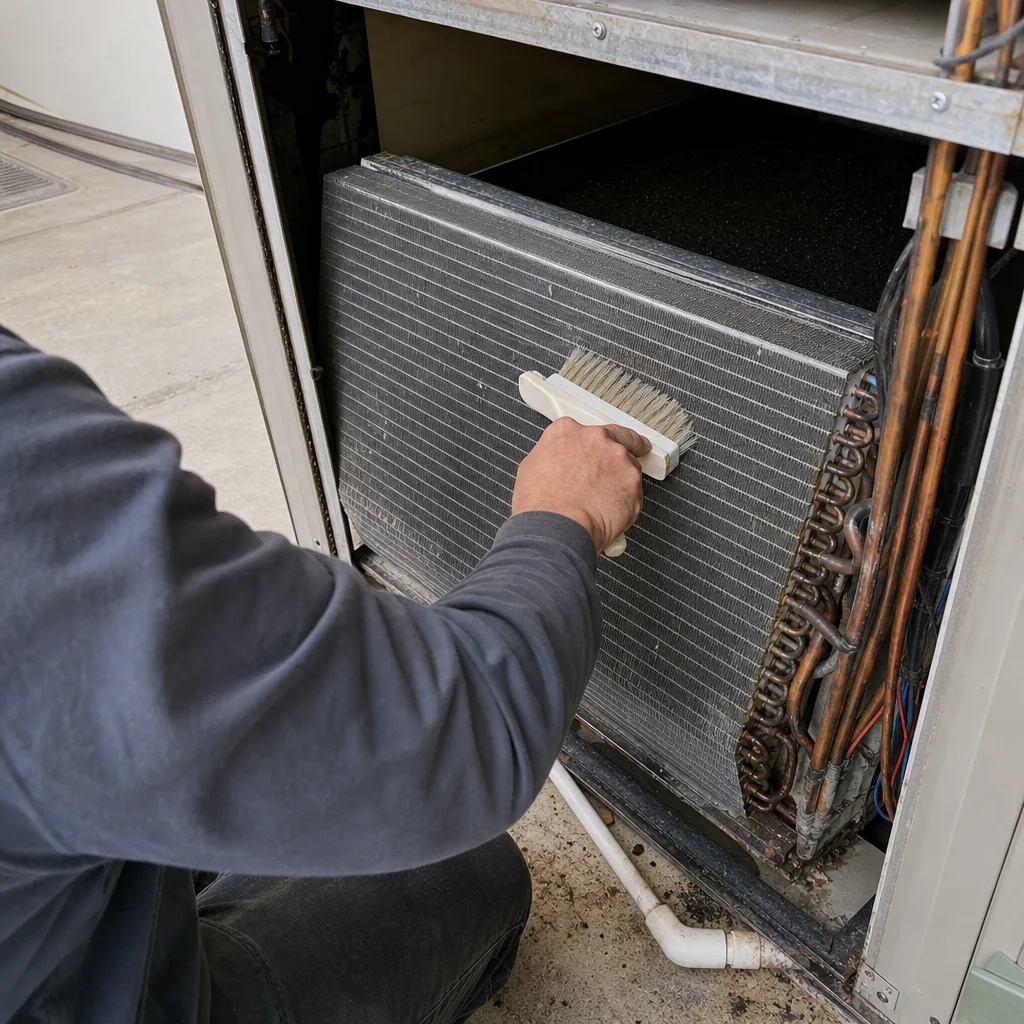
Last updated November 24, 2026
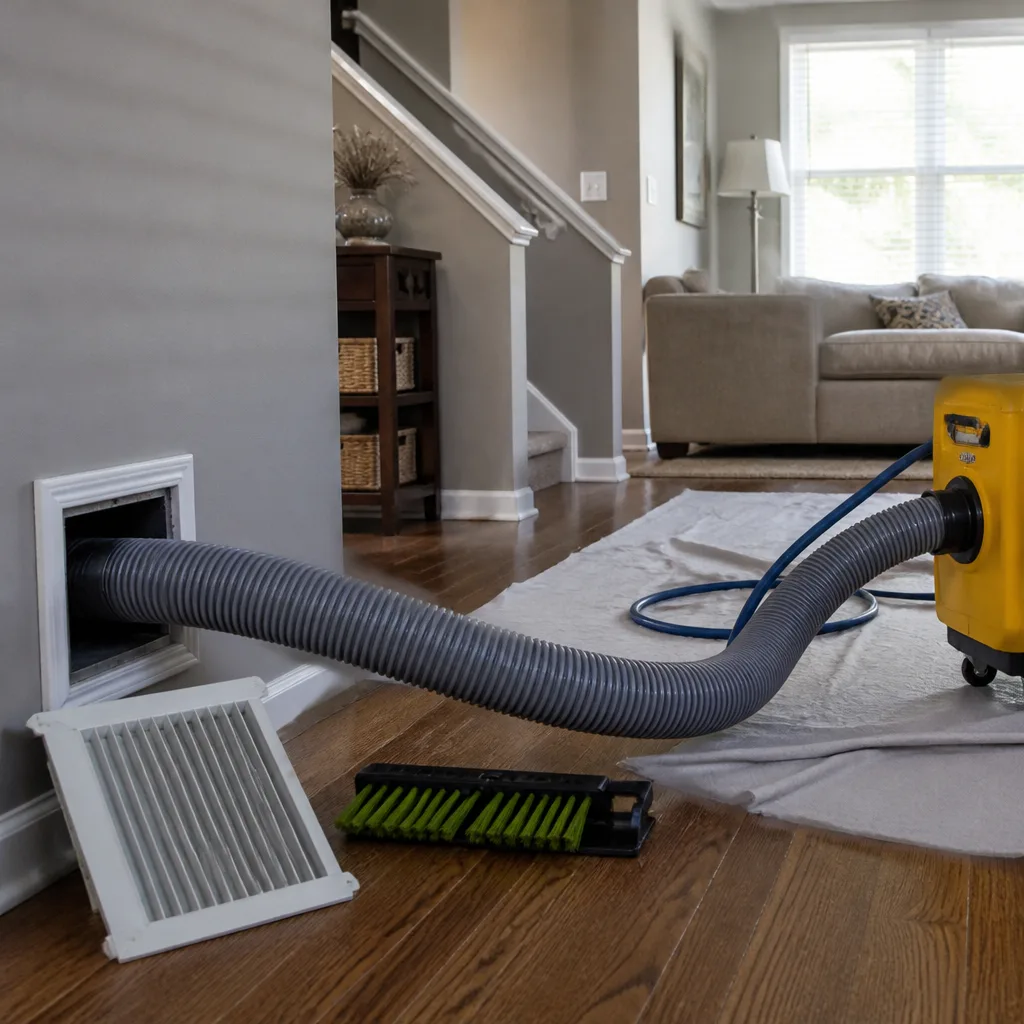 Whole-home duct cleaning
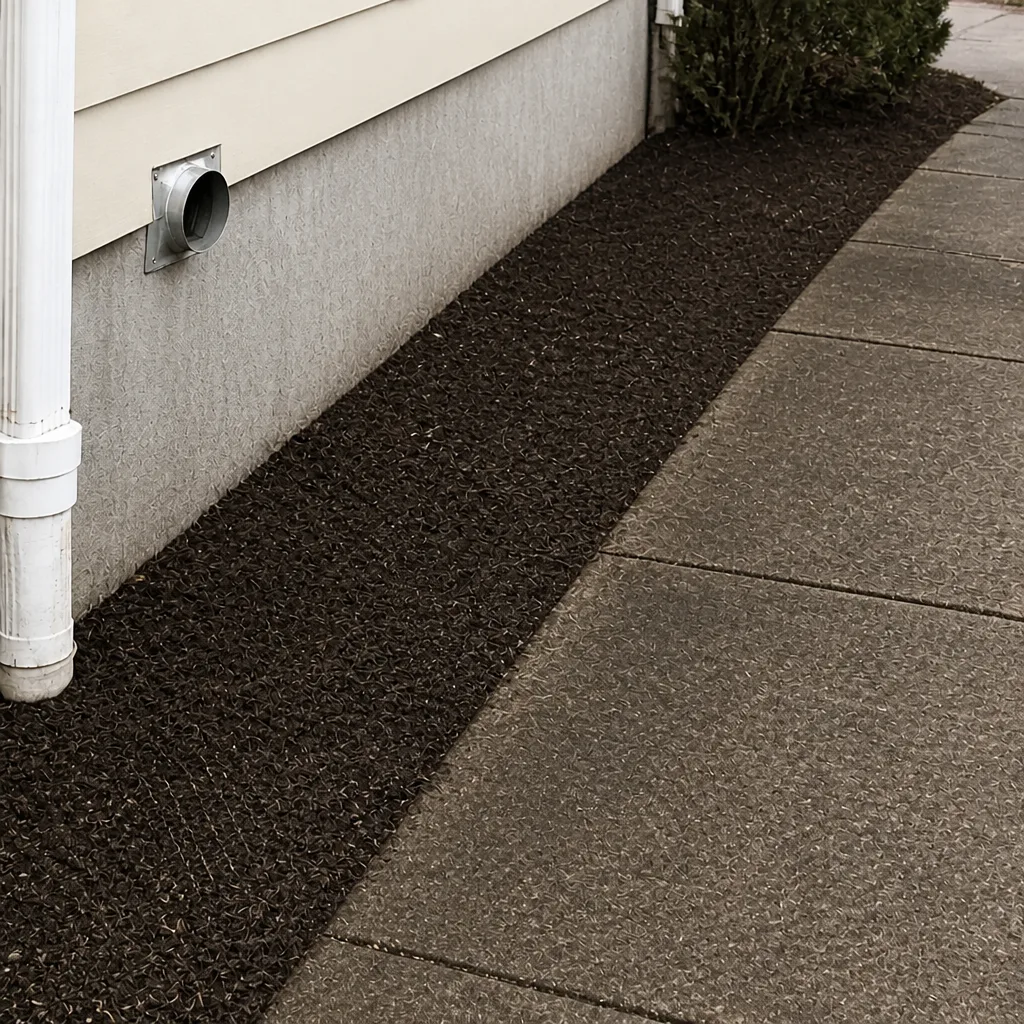
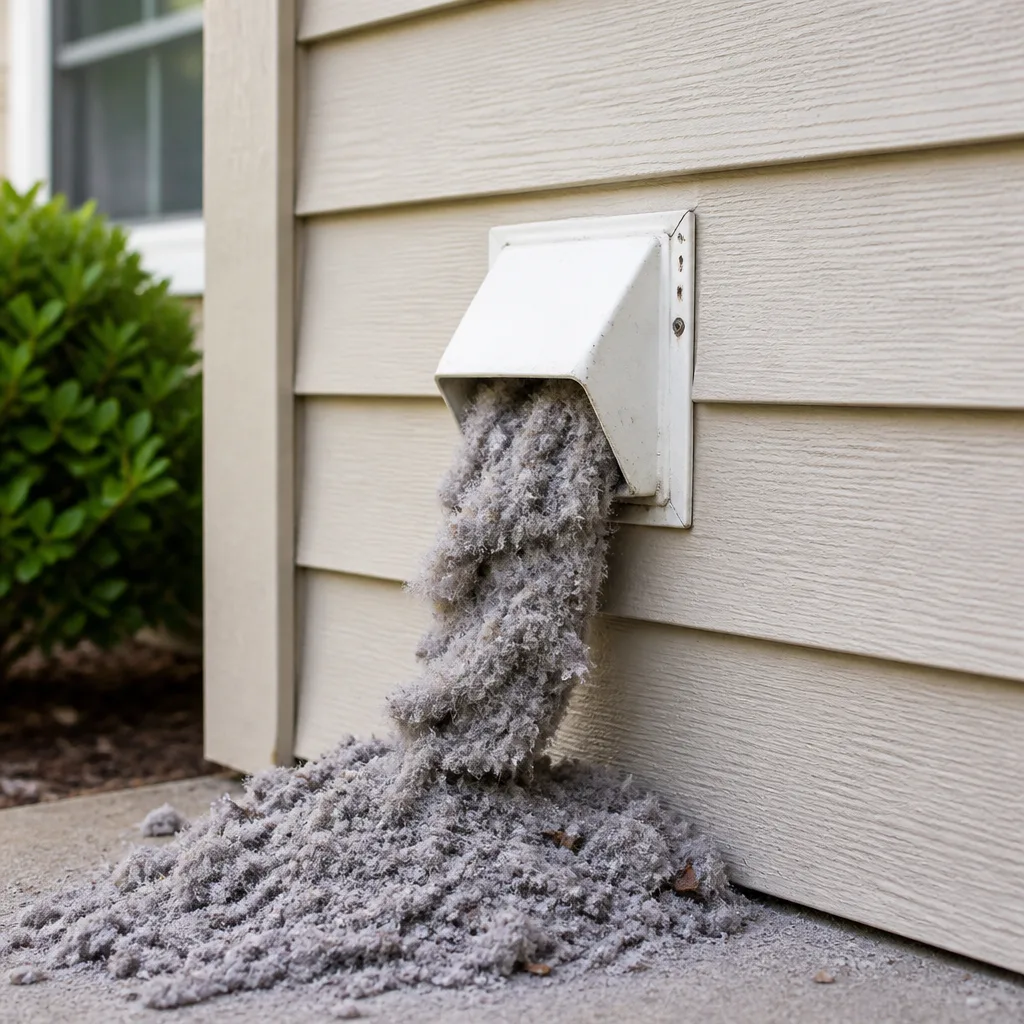 Dryer vent cleaning
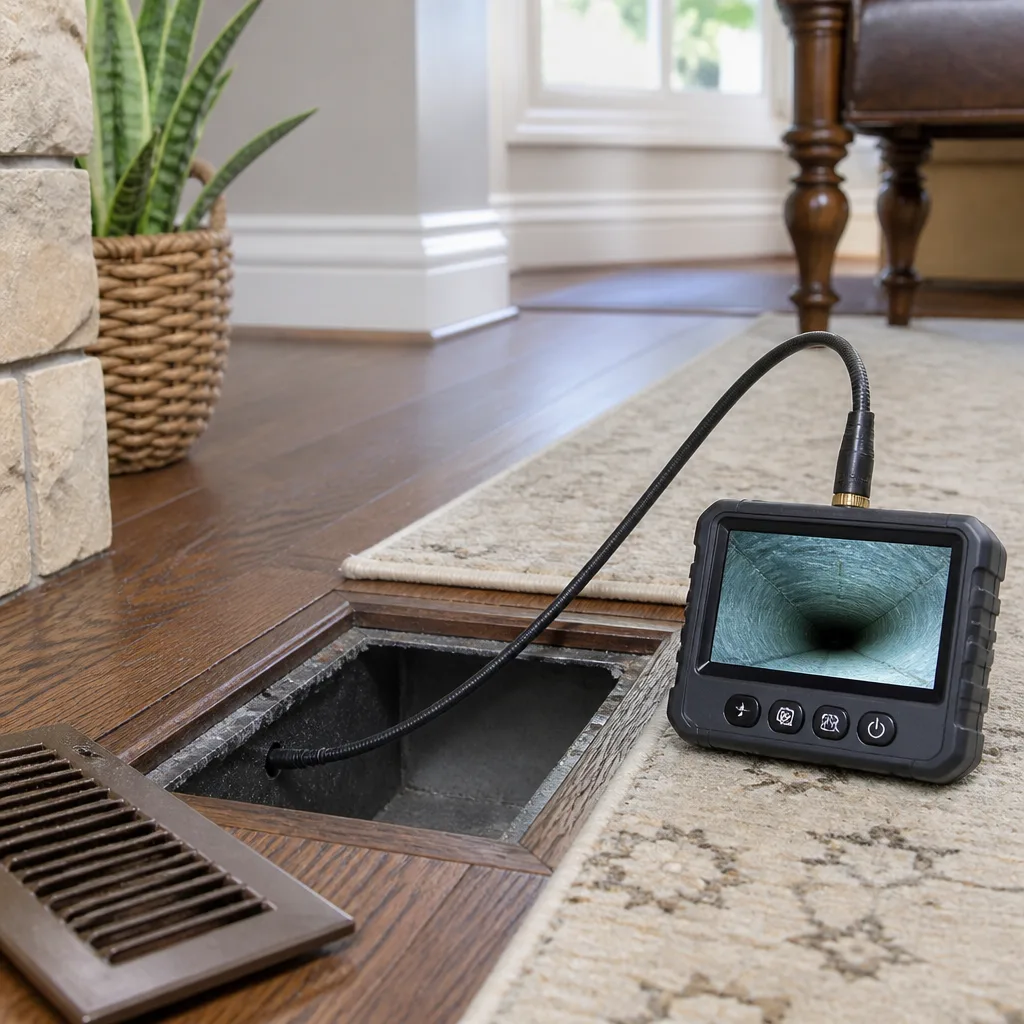 Camera inspection
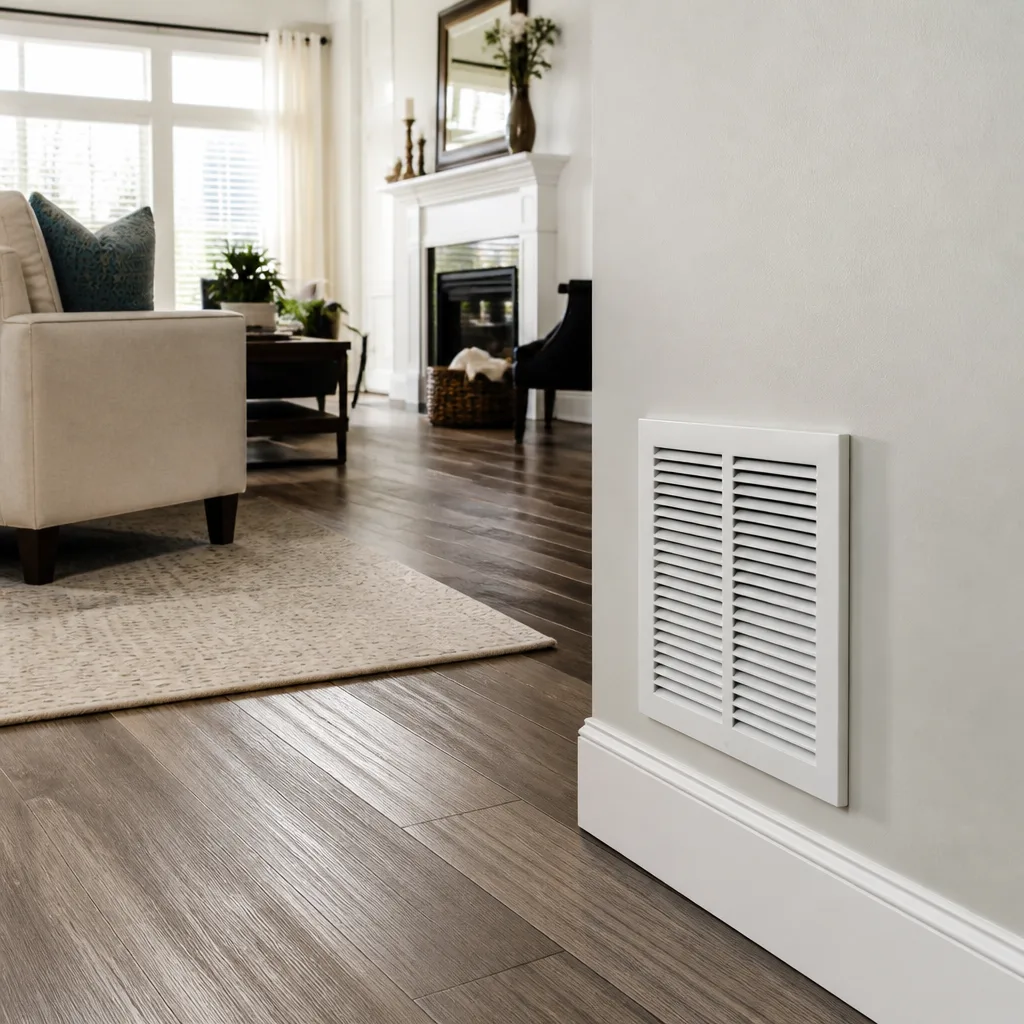 Sanitizing & deodorizing
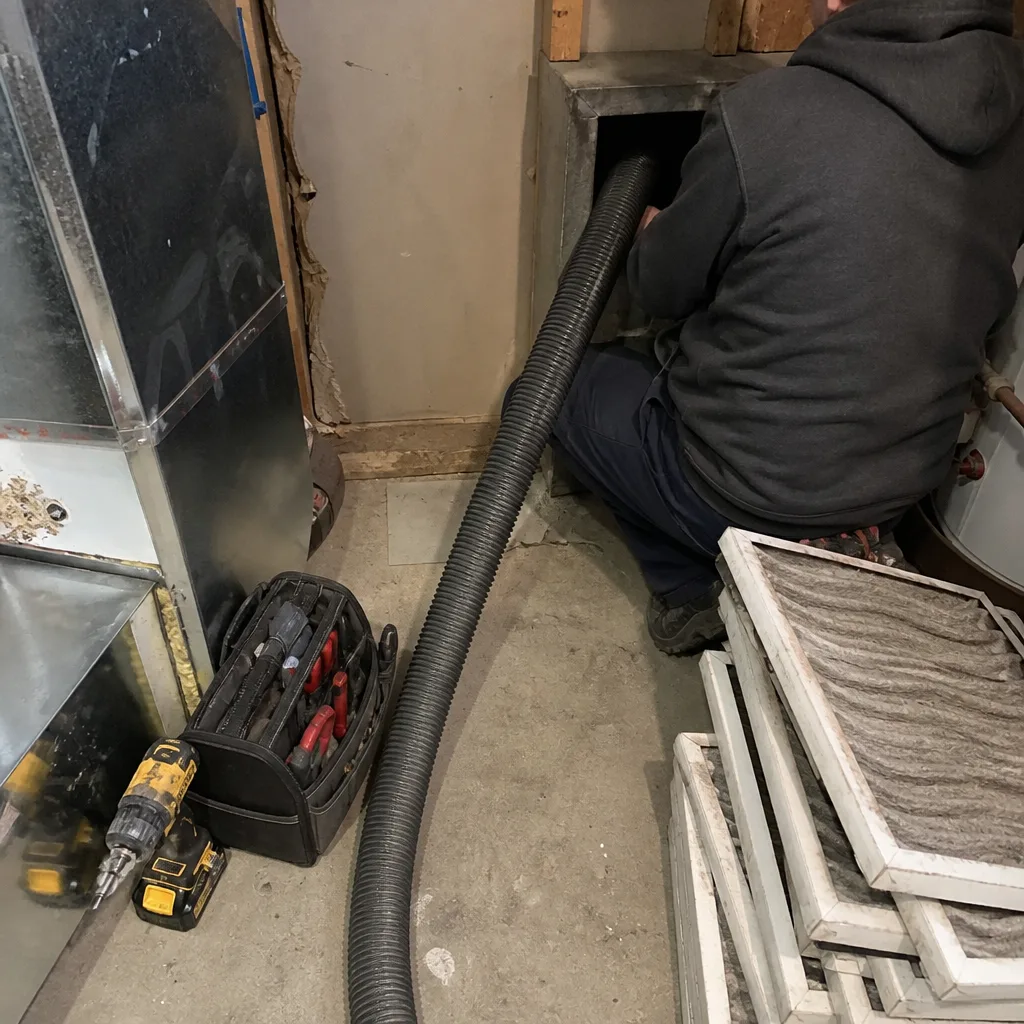
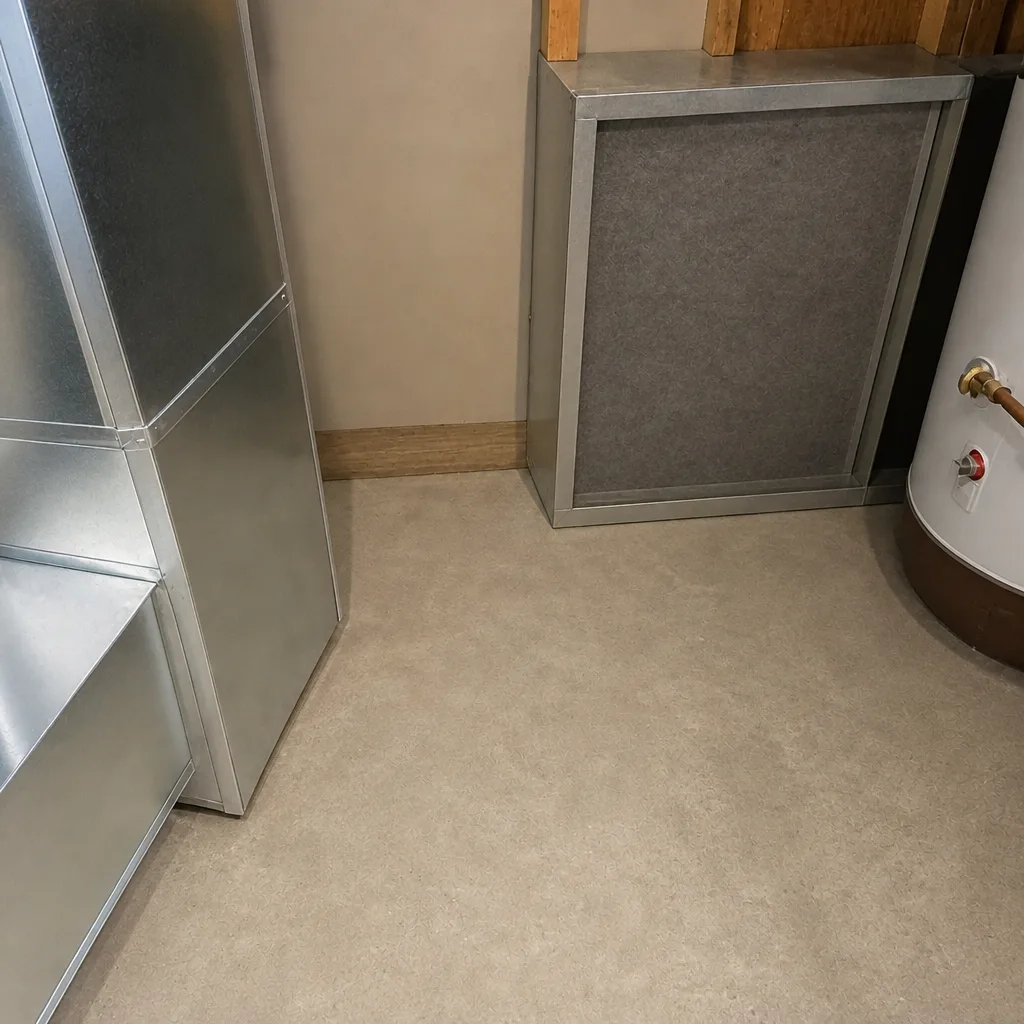
Whole-system duct and dryer vent check with before-and-after photos - you see exactly what came out of your vents
That "$99 whole-house special" is a bait ad - the real number appears once they are in your hallway, or the "clean" is a shop-vac at the register. We photograph the inside of your ducts before and after instead.
Air Duct Cleaning Warning Signs: An Orem Homeowner’s Reference Guide
A musty smell when the heat turns on is not “normal dust burning off.” It’s your duct system telling you there’s organic material in the airstream, and it won’t stop until the source is removed rather than masked. That distinction matters in Orem, where dry summers, inversion-season air and a steady pace of new construction put particular loads on residential ductwork. Most duct problems announce themselves through HVAC performance and air quality changes long before anyone can see them. In this guide, we decode the specific warning signs Orem homeowners actually encounter, explain which symptom points to which underlying issue, and show you how to tell whether your home needs cleaning, repair, or both.
Quick Answer
The main warning signs that your air ducts need attention in Orem are a musty smell when the HVAC runs, dust that collects faster in some rooms than others, uneven room temperatures and longer system runtimes, visible dust streaks or mold at the registers, and a sudden dust surge after renovation work. Each symptom points to a different problem: biological growth, a leaky or disconnected duct run, restriction buildup in the trunk lines, or heavy particulate load. Identifying which one you have determines whether the right answer is cleaning, duct repair and sealing, or a combination of the two.
Styles & brands we work with
- Whole-home duct cleaning
- Dryer vent cleaning
- Camera inspection
- Sanitizing & deodorizing
Table of Contents
- Differential Dust Accumulation by Room
- HVAC Runtime Increases and Uneven Temperatures
- Odor Diagnostics: Musty, Acrid, or Stale
- Visible Mold at Registers Versus Mold Inside Ducts
- Post-Renovation Warning Signs in Orem’s New Construction Zones
- What a Contaminated System Looks Like on Camera
- How Orem’s Climate Shapes Duct Problems
- Cleaning Versus Repair: Which Do You Actually Need?
Differential Dust Accumulation by Room
When one part of your home collects visibly more dust than another, that unevenness is information. A properly sealed duct system delivers filtered air evenly to every room, so if the bedrooms on one side of the house go dusty twice as fast as the living room, something in the distribution is off. In Orem homes, this is one of the earliest and most reliable indicators of a duct problem, and it’s usually the one homeowners overlook because each individual room seems tolerable on its own.
The pattern tells you what’s happening. Dust concentrated near one specific register usually means that branch line has a leak at a joint or boot, pulling attic or crawlspace air into the supply. Dust that builds evenly on horizontal surfaces throughout one zone points to restriction in the trunk line serving that zone, which reduces airflow and lets particulate settle instead of traveling to the return. Dust that collects around the return air grille itself suggests the return is pulling from an unfiltered space, often through gaps where the duct meets the wall or floor framing.
What to look for:
- Dust accumulating under or around a single register faster than others
- Visible dust trails or streaks at the edge of a ceiling or floor vent
- Rooms where furniture needs dusting weekly while others stay clean for a month
- Dust on top of door frames and curtain rods concentrated in one zone
- A return grille that darkens with dust far quicker than the supply registers
None of these observations require special equipment, and all of them are worth writing down before you call anyone. The pattern you record helps a technician know where to start looking. If you want the process explained end to end, our guide to air duct cleaning walks through what a full-system job involves in this area.
HVAC Runtime Increases and Uneven Temperatures
If your furnace or air conditioner is running longer than it used to reach the same thermostat setting, restriction buildup is a likely cause. Duct systems are sized for a specific airflow, and when a trunk line fills with debris or a run collapses or disconnects, the blower works harder to move the same volume of air. The thermostat still gets satisfied eventually, which is why homeowners notice the runtime before they notice anything visibly wrong. You hear the system cycling on more often, and it runs longer each cycle.
Uneven temperatures go hand in hand with this. A bedroom that was always comfortable now runs a few degrees behind the rest of the house. The upstairs gets warm while the downstairs stays cold, or one end of the house never quite catches up. In many Orem homes, the culprit is a section of flex duct that has sagged, kinked, or torn in the attic where no one looks. The system is trying to push air through a restriction it can’t overcome.
Signs that runtime and temperature problems trace back to the ducts:
- The system runs noticeably longer but the house still feels uneven
- One or more rooms never reach the thermostat setpoint
- Airflow from some registers feels weak compared with others
- The blower sounds louder or has a different pitch than before
- Energy bills climb without a change in how the house is used
Restriction and leakage are two separate problems that often appear together. A trunk full of debris restricts airflow; an unsealed joint leaks conditioned air into the attic. Cleaning addresses the first, and duct repair and sealing addresses the second. Solving only one leaves performance on the table. That’s why we treat Orem Air Duct Cleaning as a full-system job from the return air intake to the supply registers, not a surface pass with a shop vacuum.
Odor Diagnostics: Musty, Acrid, or Stale
The type of smell coming from your vents tells you which system issue you’re dealing with. This is one of the most useful diagnostic tools a homeowner has, because the nose registers categories of contamination that a visual inspection can miss. A musty smell points to biological growth. An acrid or burning smell points to an electrical or heat exchanger issue that needs a technician’s eyes, not a cleaning. A stale, flat smell points to a heavy particulate load, usually years of accumulated dust and debris that has never been removed from the system.
Here’s how to read each one:
- Musty (biological): Organic growth somewhere in the airstream, often on damp insulation or duct liner. In Orem, this typically follows a season of high indoor humidity, a roof or plumbing leak that wet the attic, or an evaporator coil that stayed damp. Cleaning and sanitizing addresses the growth; finding and fixing the moisture source prevents it from returning.
- Acrid (electrical or combustion): A sharp, chemical, or hot smell that shows up when the furnace fires is a warning about an electrical component or heat exchanger, not the ducts. Stop using the system and have it inspected by an HVAC technician before you schedule any cleaning.
- Stale (heavy particulate load): A flat, dusty smell that gets stronger each time the blower starts. This is the most common category in Orem homes that haven’t had ducts cleaned in a long time. The smell is the particulate load itself, not a live biological source.
The musty smell is the one homeowners most often misread as “dust burning off” on the first cold day. Dust burning off fades within a few hours and doesn’t come back each cycle. A musty smell that returns every time the heat starts means there’s material in the airstream. You can’t mask your way out of that. The source has to be removed.
Visible Mold at Registers Versus Mold Inside Ducts
Mold at the register and mold inside the duct are different problems with different fixes. Mold on or around a supply register, where you can see it, usually points to condensation forming on a cold surface during the cooling season. It’s a localized issue, often on the grille itself or the first inch of duct behind it, and it’s typically resolved by correcting the humidity or insulation problem and cleaning the affected area. Mold deeper in the duct system is a different story: it means the growth has established itself inside the airstream on insulation or liner, and every time the system runs it’s distributing spores through the house.
This distinction matters because the two situations call for different interventions. Register-level mold can be cleaned. Duct-interior mold may mean the affected run has to be replaced, not just cleaned, because mold in porous duct liner can’t always be fully removed. A camera inspection is the only way to know which one you’re dealing with.
What to check before you call:
- Look at the register surface and the first visible inch of duct behind it
- Notice whether the growth is on the grille, the duct wall, or the ceiling material around it
- Check whether the affected register runs cooler or more humid than the others
- Ask whether the room has had a moisture event (leak, flood, or high humidity)
- Note whether the smell is localized to that room or system-wide
We use Abatement Technologies HEPA-filtration equipment when contamination is present because standard vacuuming can aerosolize spores into the living space. Contamination control is the standard, and it’s the reason remediation crews use HEPA containment on every job. A typical residential cleaning crew without that equipment can make a mold problem worse before they make it better.
Post-Renovation Warning Signs in Orem’s New Construction Zones
If your home is near one of Orem’s active construction areas, or if you’ve recently finished a remodeling project, your duct system has almost certainly taken on drywall dust. Remodeling generates millions of particles smaller than a filter can catch, and the HVAC system is often left running during the work to keep the space warm or cool. That means the system pulls fine drywall dust through the return, deposits it on every surface in the duct interior, and recirculates it for weeks. You can’t see it in a normal walkthrough, which is why it goes unnoticed until the camera goes in.
What a post-renovation contaminated system looks like on camera:
- A uniform white or gray coating on the duct interior, especially the return trunk and plenum
- Drywall dust accumulated at the bottom of horizontal runs and the base of vertical risers
- Dust packed against the evaporator coil where airflow slows
- Visible drywall chunks or chunks of construction debris in the return
- Dust settling into the flexible duct corrugations where a vacuum can’t reach it
The reason this is a particular issue in Orem is the pace of new construction and major remodels across the city, from established neighborhoods near the university to newer development on the edges. Drywall dust doesn’t stay put. It migrates through the whole system every time the blower runs, and once it settles on the coil or into flex duct corrugations, a simple filter change won’t remove it. A full-system cleaning after a major remodel is the standard, and doing it before you turn the system on for the season makes the biggest difference. Our guide to HVAC cleaning explains how the coil and blower side of the job gets handled alongside the ducts.
What a Contaminated System Looks Like on Camera
A camera inspection is the only way to know what’s actually happening inside your ductwork, and it’s the single biggest gap between a proper cleaning and a guess. The exterior of a duct tells you nothing. A clean-looking register can sit on top of a duct packed with debris, and a well-sealed joint can conceal a collapsed run behind it. A camera inspection opens the system up, shows you what’s inside, and lets you make a decision based on evidence rather than a sales pitch.
What the camera typically reveals in Orem homes:
- Debris depth in the trunk line and plenum that no homeowner would guess from the register
- Dust and lint accumulation at the coil face, reducing heat transfer and airflow
- Kinked, torn, or disconnected flex duct runs in the attic
- Rust or moisture staining inside duct walls, pointing to a leak or humidity problem
- Pest activity or debris in the return air system
- Post-renovation drywall dust spread across multiple zones
The camera also gives you something else: before-and-after evidence. When a technician cleans your ducts and shows you photos of the same duct section before and after, you can see exactly what was done. That’s the accountability standard this trade has too often lacked. We build it into every job.
How Orem’s Climate Shapes Duct Problems
Orem’s dry, four-season climate creates a specific pattern of duct problems that differs from the coast or the Deep South. The big factors are the dry summers, the cold winters, and the seasonal inversion events in Utah Valley that trap particulate in the air. During inversion periods, outdoor air quality drops, and any outdoor air infiltrating through unsealed duct joints or a leaky return pulls that particulate into the living space. In a house with a tight duct system, that infiltration doesn’t happen. In a house with gaps and disconnects, it does.
The dry summers also matter. Low humidity means less condensation on cooling coils, which is good, but it also means dust stays airborne longer and settles more slowly, which is why some Orem rooms seem to collect dust on every horizontal surface for months. The winter heating season is when the airstream moves the most air, and that’s when a duct system with a heavy particulate load becomes most apparent: the smell at startup, the dust streaks at the registers, the longer runtimes.
Winter also means the system runs more hours overall, so any restriction in the ductwork costs more in energy. A clean, sealed duct system matters most in exactly the season when you’re running the furnace hardest. That’s why we recommend homeowners treat duct condition as part of winter prep, along with the furnace tune-up. It’s the same system.
Cleaning Versus Repair: Which Do You Actually Need?
Cleaning removes debris. Repair and sealing fix the pathways that let debris in and conditioned air out. In our experience, most Orem homes that complain about ongoing dust, uneven temperatures, or smells need both, because the contamination is a symptom of a system that isn’t sealed properly. Cleaning alone gives you a clean duct for a season. Cleaning plus sealing keeps the system clean and keeps the conditioned air where you paid for it.
Here’s how to tell which one you need, using the warning signs in this guide:
- Clean only: A system that’s structurally sound but has visible dust accumulation in the ducts, a musty smell that tracks to biological growth, or post-renovation drywall dust load.
- Repair and seal only: A system that’s already clean but has disconnected or kinked flex runs, leaky joints, or duct runs that pull from the attic or crawlspace. Airflow and comfort issues dominate.
- Both, in one visit: The most common scenario. Contamination has built up because the system is leaking. Cleaning removes the debris, sealing fixes the source, and the system stays clean.
We use Rotobrush rotary-brush systems to physically scrub duct walls rather than just vacuum them, and Nikro negative-air equipment to capture dislodged debris at the source. That last part matters: without negative pressure during the job, cleaning can spread dust into the living space. Cleaning without sealing leaves the underlying leak in place. Cleaning with sealing stops the contamination at the source. Our dryer vent cleaning service follows the same principle: cleaning and maintenance are one job, not two.
Common Mistakes to Avoid
- Chasing the lowest quote without knowing the scope. A quote that doesn’t include a camera inspection, negative-air containment, and access to every run isn’t a quote for the same job. In Orem, that gap in scope is where cheap bids turn into expensive surprises.
- Assuming a musty smell will go away on its own. It won’t. Organic growth in a duct needs the source removed, not a seasonal cycle of air fresheners. If the smell comes back every time the heat starts, that’s a signal.
- Cleaning before checking for leaks. If your ducts are leaking into the attic or crawlspace, cleaning the ducts won’t fix the airflow or the contamination over the long term. Repair and sealing have to come first or alongside.
- Running the system during a remodel. If you’re remodeling a room in Orem and the HVAC is on during demolition, the system is pulling drywall dust into every duct. Seal off the return or shut the system down during heavy work.
- Skipping the coil and plenum. The ducts are only one part of the air pathway. If the evaporator coil is coated in dust, a clean duct system still can’t deliver full airflow. The HVAC side has to be included.
- Trusting a “deep clean” price without a camera check. If the technician can’t show you what’s inside the ducts, they can’t tell you what needs cleaning. A camera inspection is part of the job, not an upsell.
- Ignoring differential dust. One room that goes dusty twice as fast isn’t a lifestyle difference. It’s a duct issue. Note the pattern before you schedule anyone.
See the difference
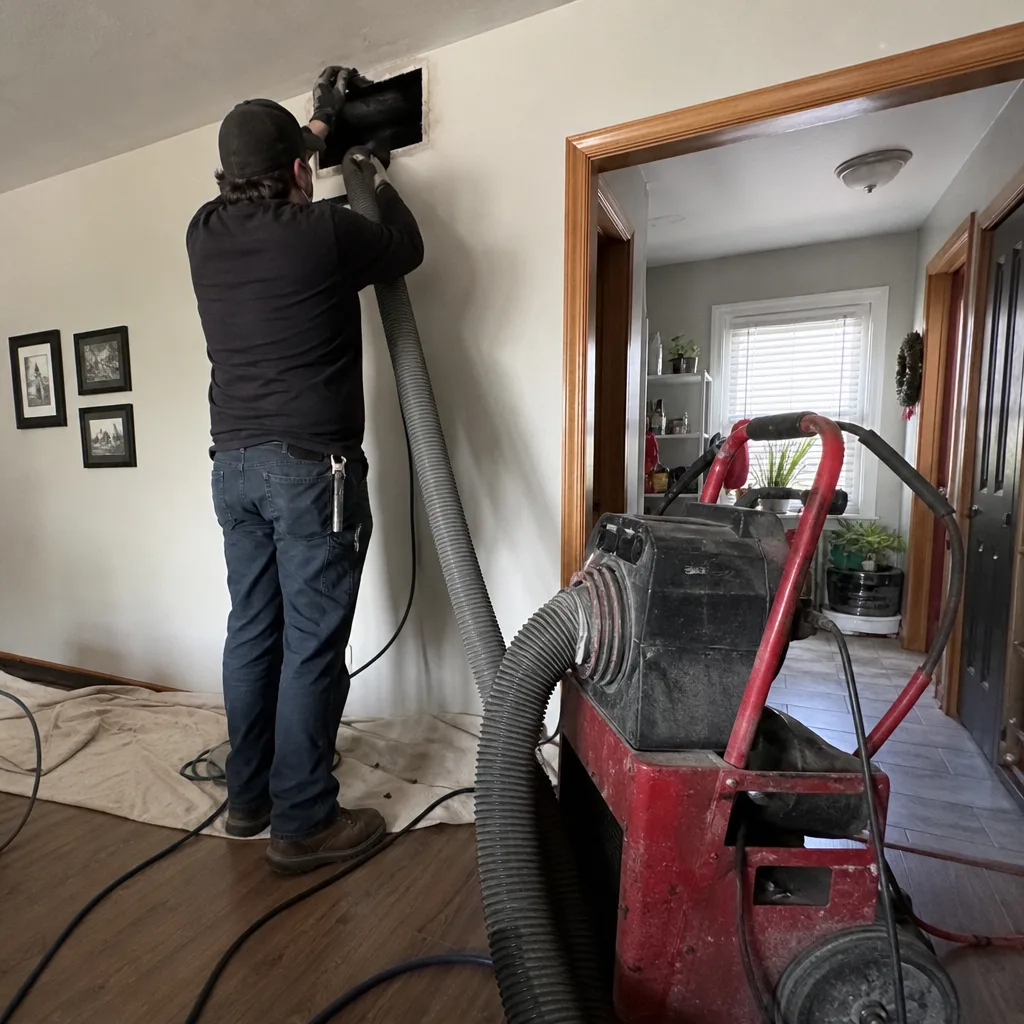 Before
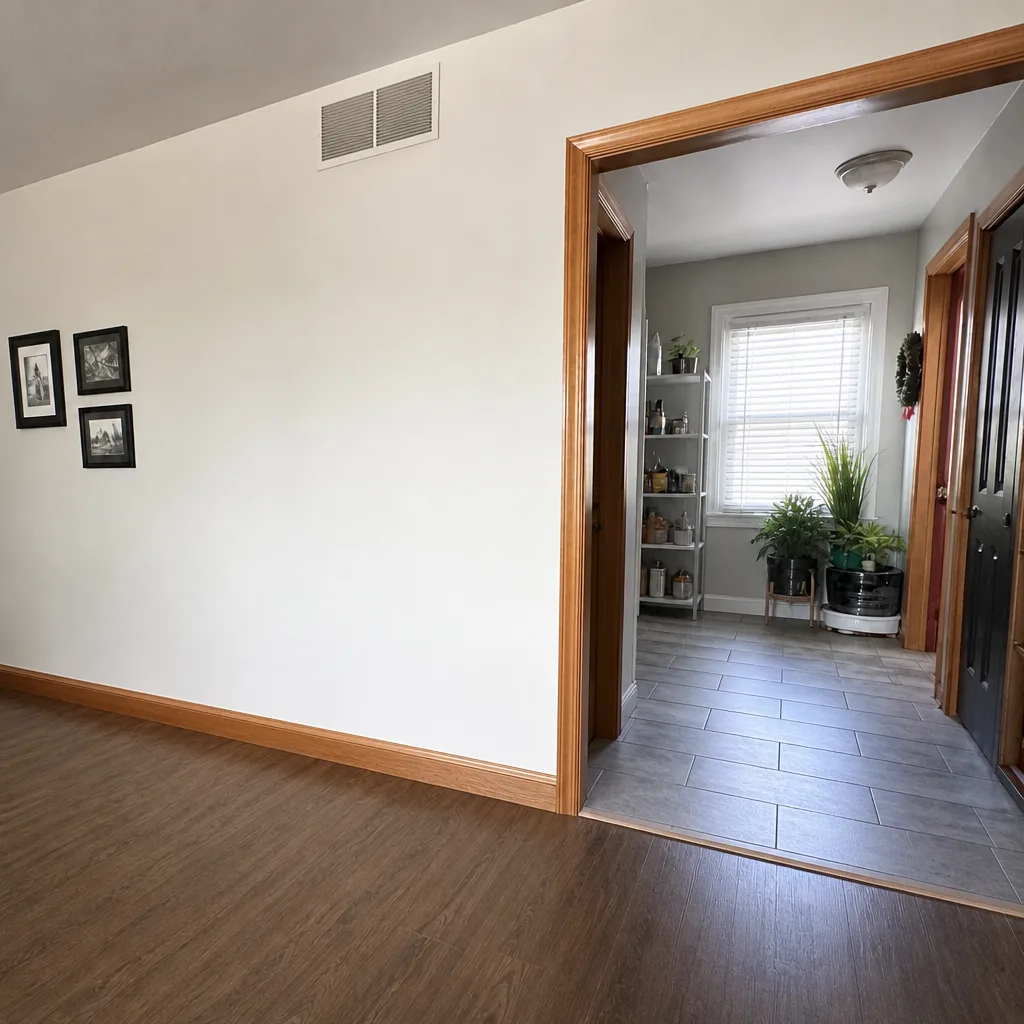 After
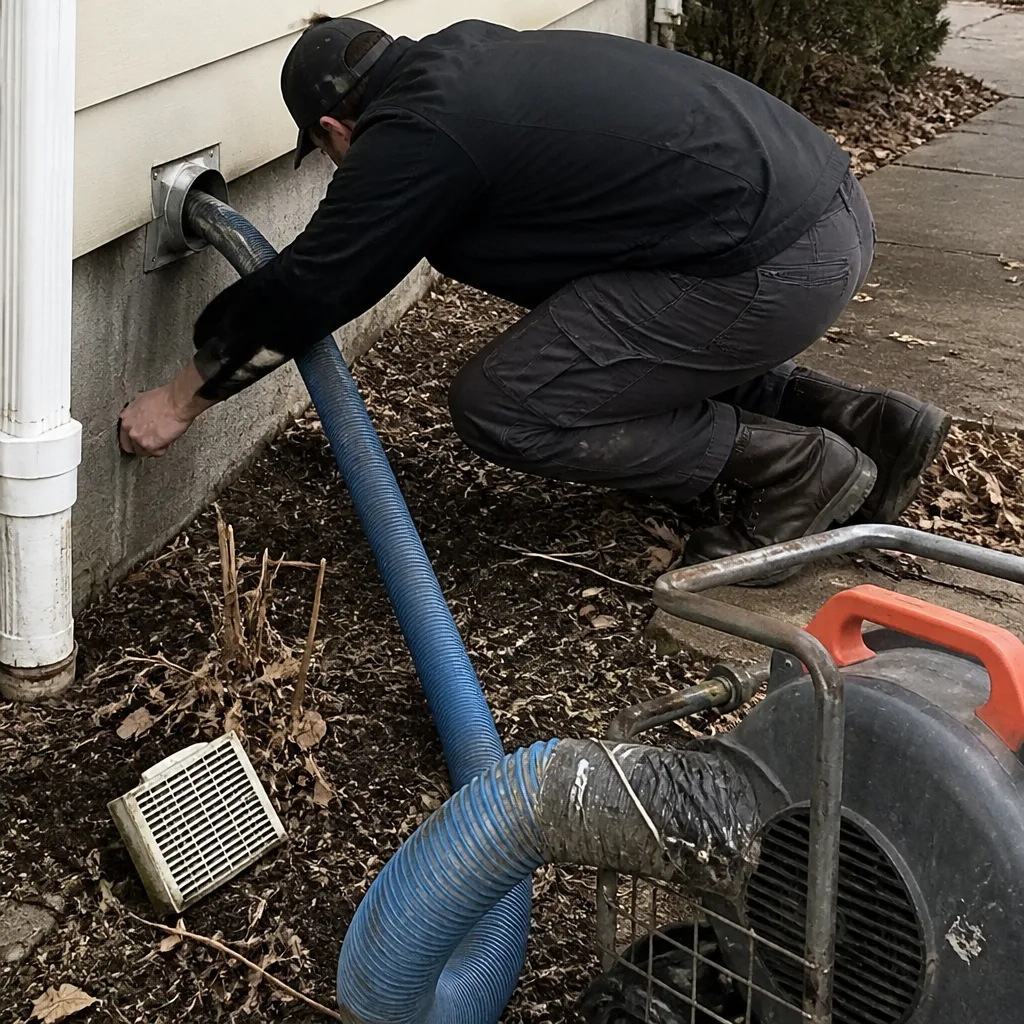 Before
 After
 Before
 After
When to Call a Professional
Call a professional if any of the warning signs in this guide persist for more than a season. The specific scenarios that call for a visit from a technician: a musty smell that returns every time the heat comes on, a room that consistently runs a few degrees behind the rest of the house, visible mold at any register or in the duct behind it, a post-renovation dust surge you can’t clear, or a system that’s running longer than it used to without an obvious reason. Each of those signs points to a real duct condition that a camera inspection can confirm. Orem Air Duct Cleaning offers free estimates in Orem. Call (855) 726-7143. We answer 24/7. Fast dispatch from 7am to 7pm, Sunday through Friday. Our technicians have up to 10 years of experience, and the local pros we connect you with are licensed and insured as their state requires.
Frequently Asked Questions
Most Orem homes benefit from a cleaning every three to five years, though that interval shortens if you’ve done a major remodel, have pets, or notice the warning signs in this guide. Homes with recent construction dust, a musty smell that returns each heating season, or visible register accumulation should be evaluated sooner. A camera inspection tells you what the system actually needs; call (855) 726-7143 for an exact quote – estimates are free.
Yes, a musty smell from the vents is usually a sign that there’s biological growth somewhere in the airstream, and cleaning plus sanitizing is the standard first step. The source of the moisture has to be found and fixed too, otherwise the growth returns. We use Guardsman treatment products for sanitizing duct interiors after cleaning. Call (855) 726-7143 for an exact quote – estimates are free.
A single dusty room usually means that branch line has a leak, a loose boot, or a restriction in the run that’s slowing airflow and letting particulate settle. The pattern you observe points to which part of the duct system needs attention. A camera inspection confirms it. Call (855) 726-7143 for an exact quote – estimates are free.
Yes, a duct cleaning after a major remodel is standard practice, because drywall dust migrates through the whole system when the HVAC runs during construction. The dust settles on duct interior surfaces and the coil, and a filter change won’t remove it. Scheduling the cleaning before the first heating season after the work protects the system and your air quality. Call (855) 726-7143 for an exact quote – estimates are free.
Air duct cleaning in Orem typically costs a few hundred dollars for a standard residential system, with the exact figure depending on the number of runs, the contamination level, and whether repair or sealing is included. We don’t quote per vent and we don’t hand out teaser prices. One flat price per system, agreed before work starts, and before-and-after photos of your own ducts. Call (855) 726-7143 for an exact quote – estimates are free.
You should see before-and-after photos of your own ducts, not stock images or a generic report, and you should be able to review them with the technician before the job closes out. A camera inspection at the start and the finish is the standard we hold to. If a contractor can’t show you the inside of your ducts, they can’t tell you what was cleaned. Call (855) 726-7143 for an exact quote – estimates are free.
The Bottom Line
Your duct system tells you when something is wrong. A musty smell at startup, one room that collects dust faster than the rest, a furnace that runs longer than it used to, visible growth at a register, or a dust surge after a remodel all point to a real condition inside the ducts. The key is matching the symptom to the right intervention. Cleaning, repair and sealing, and HVAC-side cleaning each solve a different part of the problem, and most Orem homes with warning signs need more than one of them. If you’ve noticed any of the signs in this guide, a free estimate and a camera inspection will tell you exactly what your system needs. Orem Air Duct Cleaning can be reached at (855) 726-7143. We answer 24/7. Fast dispatch from 7am to 7pm, Sunday through Friday.
Written by the team at Orem Air Duct Cleaning.